
De nieuwe P.A.C.E. Profiler: je snelheden in tempo, gratisThe new P.A.C.E. Profiler: your speeds as a pace, free

Een wedstrijdtijd is één getal. Hij zegt hoe snel je over die afstand was, maar niet hoe snel je kunt sprinten, hoeveel van die snelheid je over 200 m behoudt, of waar je aerobe snelheid ligt. Twee lopers met dezelfde 5 km-tijd kunnen een heel ander snelheidsprofiel hebben.A race time is a single number. It tells you how fast you were over that distance, but not how fast you can sprint, how much of that speed you keep over 200 m, or where your aerobic speed lies. Two runners with the same 5 km time can have a very different speed profile.
Daar dient P.A.C.E. voor. Vanaf vandaag staat de vernieuwde publieke editie van de P.A.C.E. Profiler online: gratis, zonder account, en de berekening gebeurt in je eigen browser.That is what P.A.C.E. is for. From today, the renewed public edition of the P.A.C.E. Profiler is online: free, no account, and the calculation runs in your own browser.
Wat je meetWhat you measure
Een paar tests op de piste, verdeeld over twee testdagen: een vliegende sprint over 30 m, een maximale 200 m vanuit stilstand, en maximale lopen van 6 en van 12 minuten. Extra tijdlopen van 3 en 9 minuten zijn optioneel. Liep je onlangs wedstrijden van 2 tot onder 16 minuten, dan kunnen ook die als bron dienen. Zonder sprint krijg je wel je critical speed, maar nog geen ratio’s. Nieuw in deze tests? Lees eerst zo test je.A few tests on the track, spread over two test days: a 30 m flying sprint, a maximal 200 m from a standing start, and maximal runs of 6 and of 12 minutes. Extra time trial runs of 3 and 9 minutes are optional. If you recently raced over 2 to under 16 minutes, those races can serve as a source too. Without a sprint you still get your critical speed, but no ratios yet. New to these tests? Read how to test first.
Wat je zietWhat you see
Eerst in gewone woorden: je vier kernsnelheden als tempo in min/km. Je sprintplafond, je snelheid over 200 m, je aerobe snelheidsanker en je critical speed (kritische snelheid), een schatting van je maximale metabole steady state.First in plain words: your four core speeds as a pace in min/km. Your sprint ceiling, your 200 m speed, your aerobic speed anchor and your critical speed, an estimate of your maximal metabolic steady state.
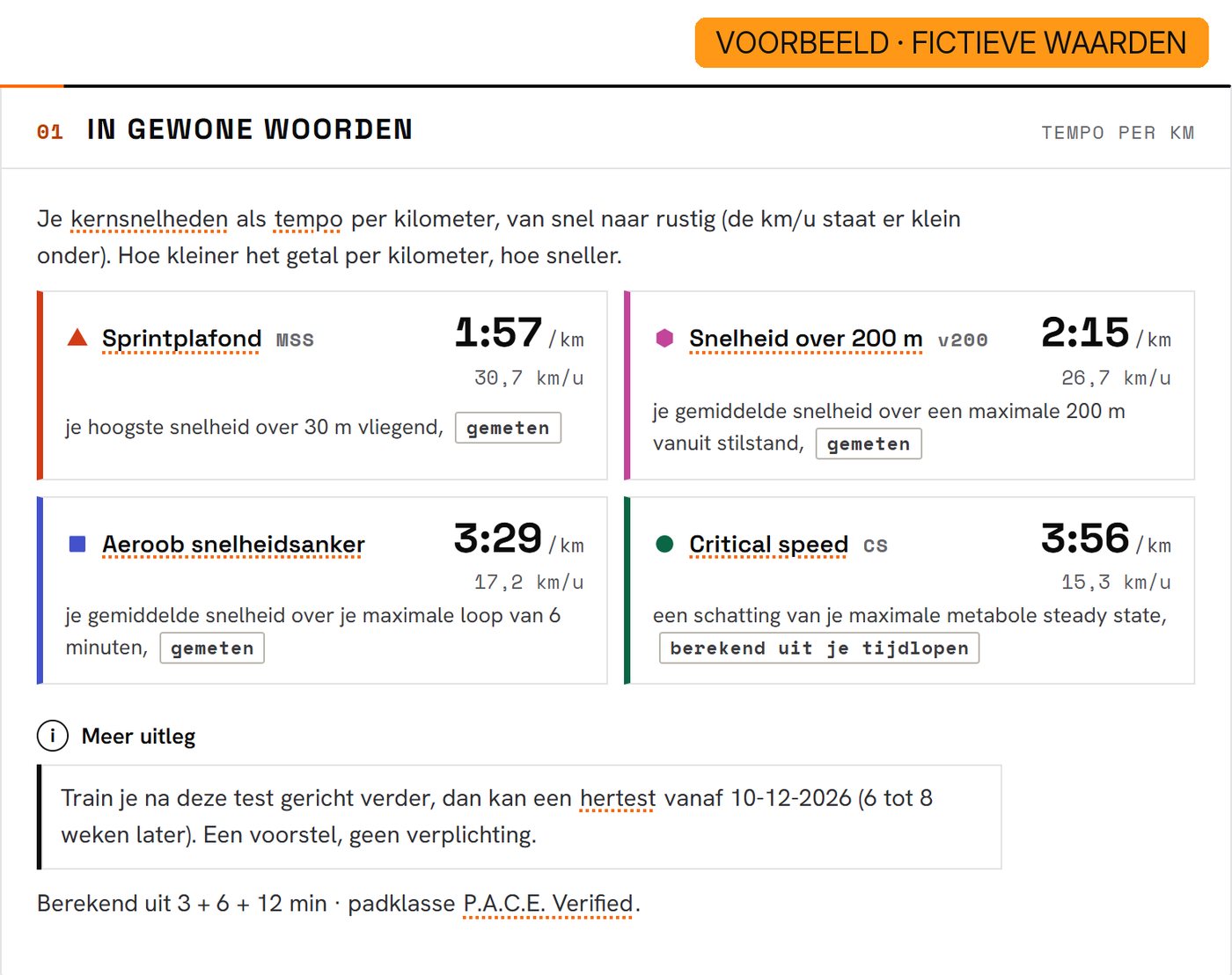
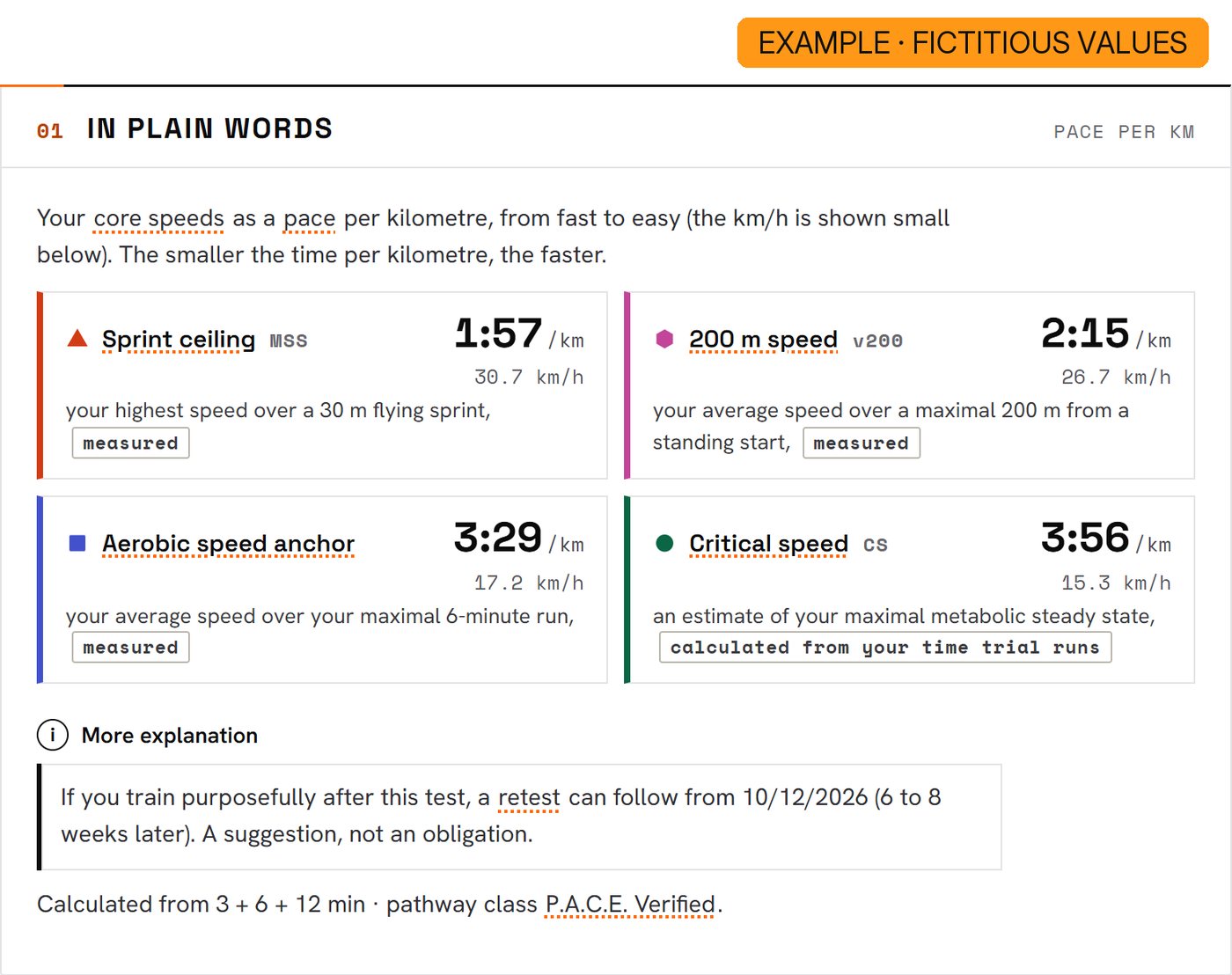
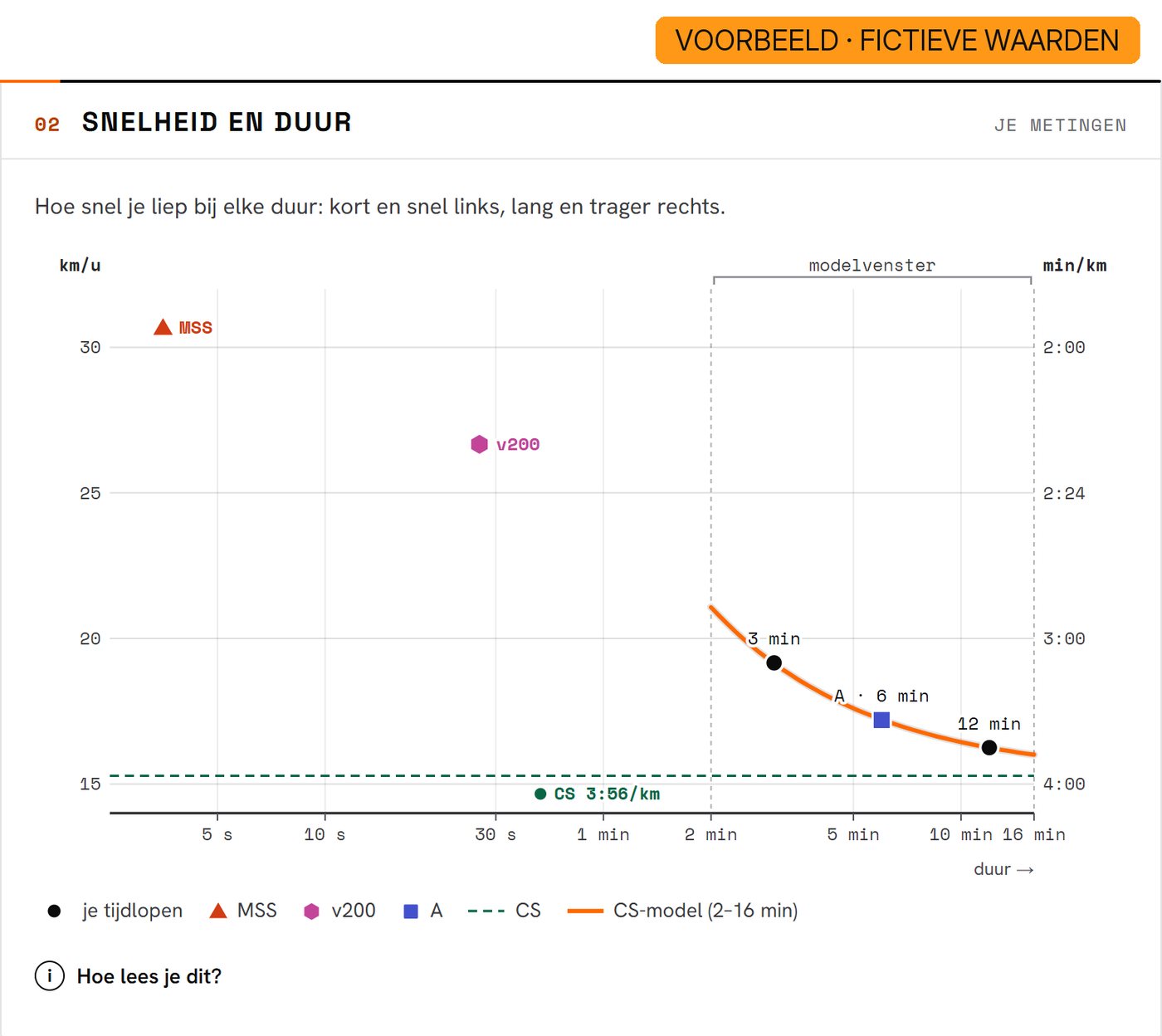
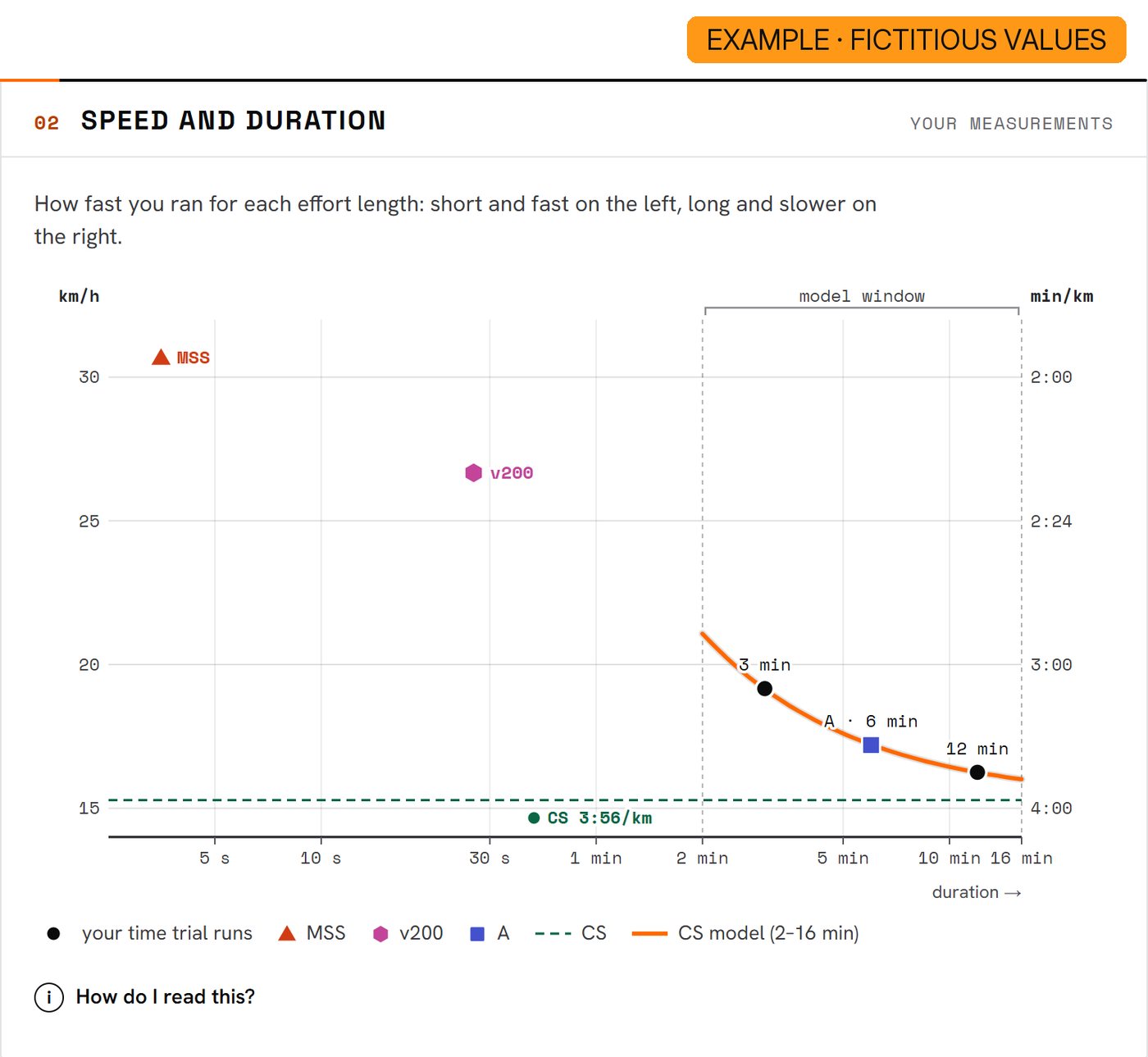
Daaronder de snelheid-duurcurve: hoe snel je liep bij elke duur, kort en snel links, lang en trager rechts.Below that, the speed–duration curve: how fast you ran for each effort length, short and fast on the left, long and slower on the right.
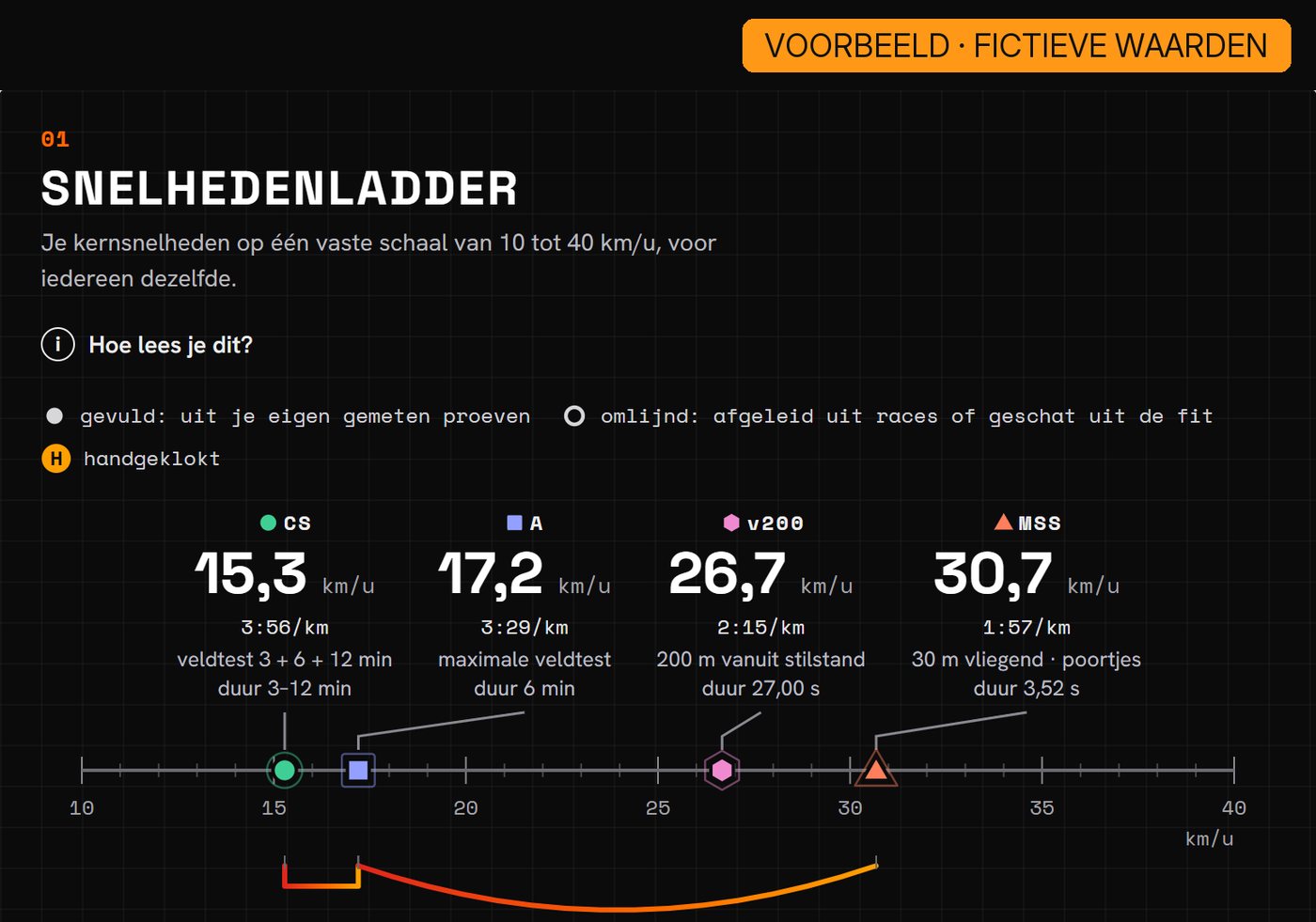
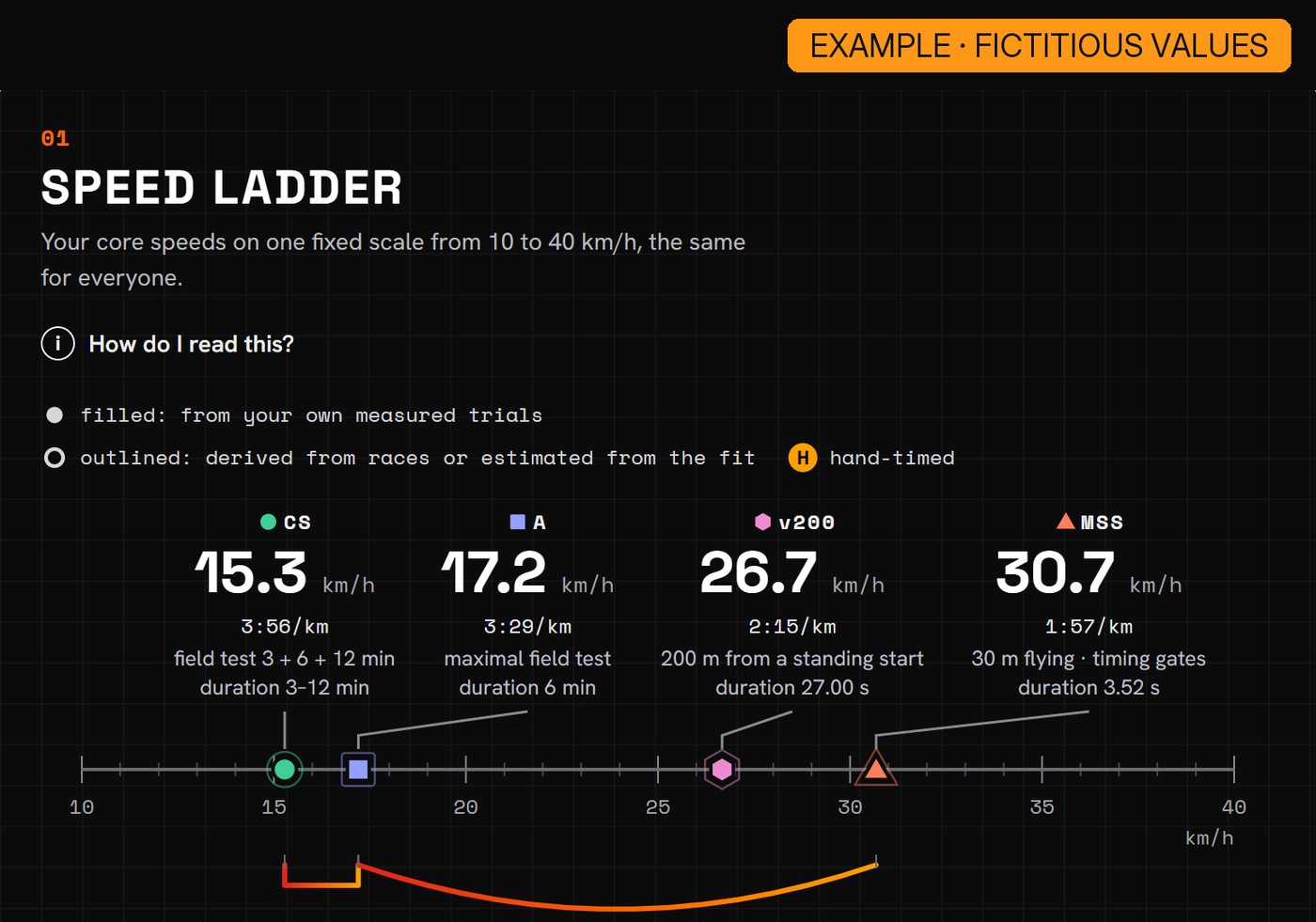
Wil je meer zien, zet dan de expertweergave aan. Je kernsnelheden staan dan op de snelhedenladder, één vaste schaal die voor iedereen dezelfde is. Je ziet de ratio’s tussen je eigen snelheden, waar de literatuur het toelaat naast waarden uit gepubliceerde groepen lopers: ter vergelijking, uitdrukkelijk zonder niveau of percentiel voor jou. En de Quality Vector toont dimensie per dimensie hoe degelijk je metingen zijn, zonder er één score van te maken.Want to see more? Switch on the expert view. Your core speeds then sit on the speed ladder, one fixed scale that is the same for everyone. You see the ratios between your own speeds and, where the literature allows it, values from published groups of runners: for comparison, explicitly with no level or percentile for you. And the Quality Vector shows, dimension by dimension, how sound your measurements are, without turning them into one score.
Een assistent voor de testdagAn assistant for test day
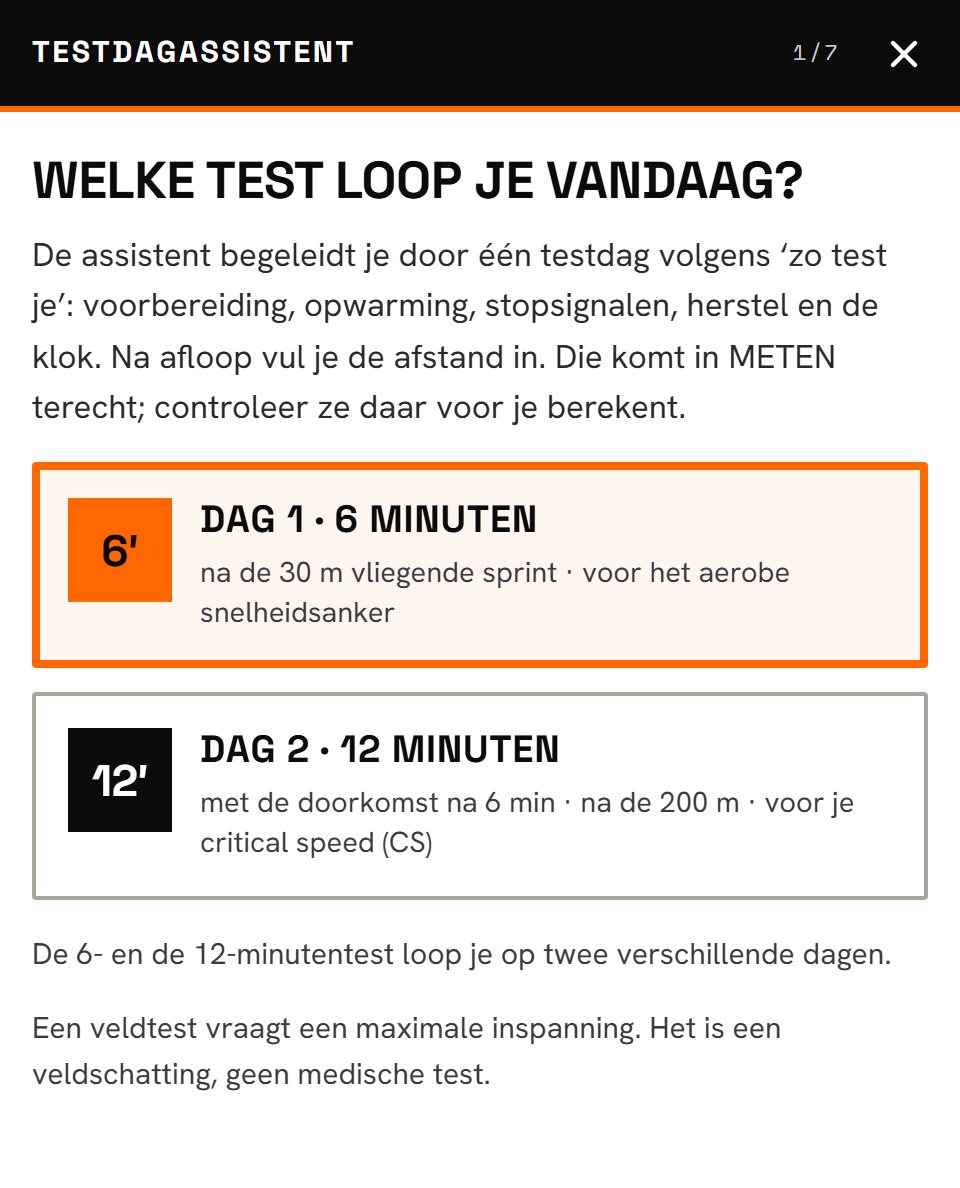
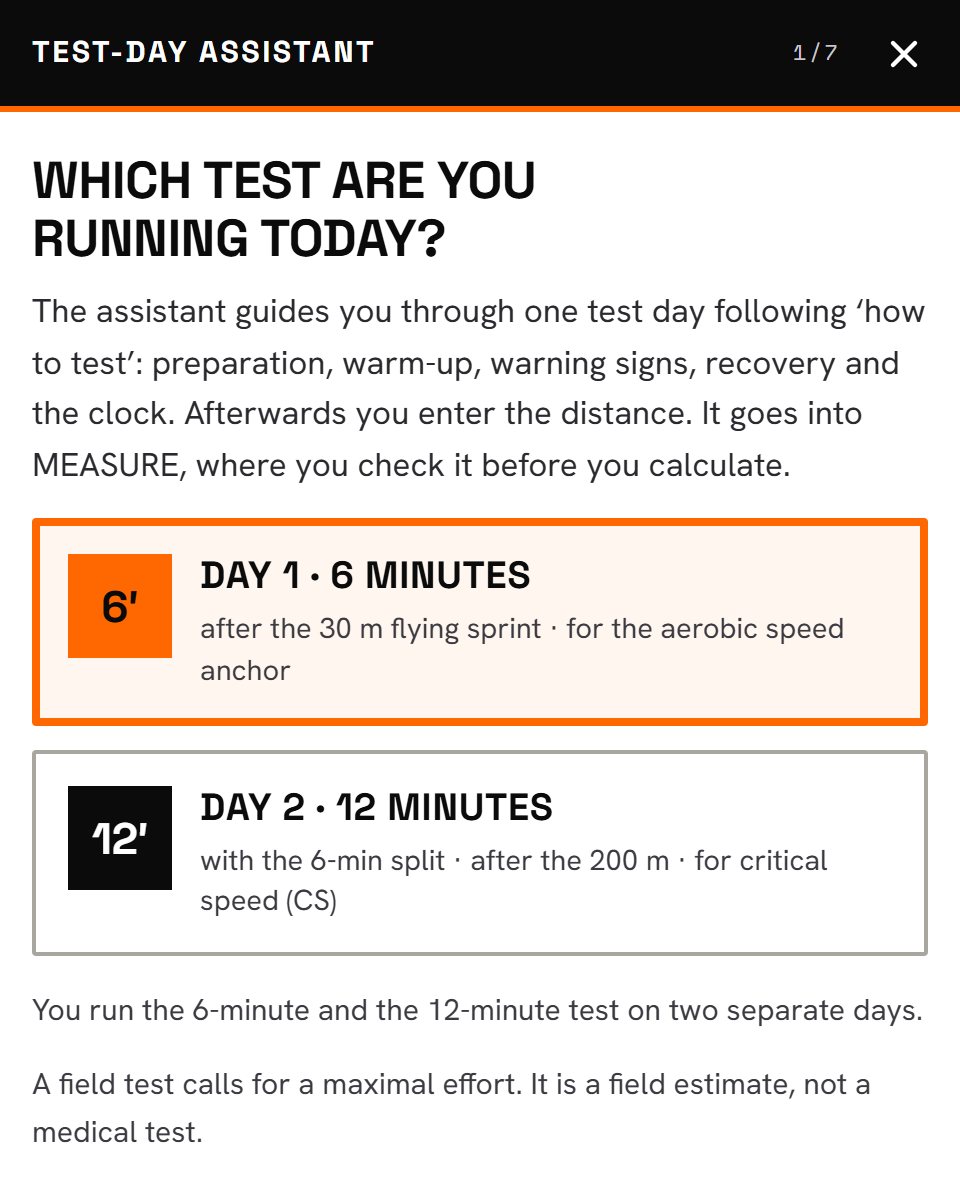
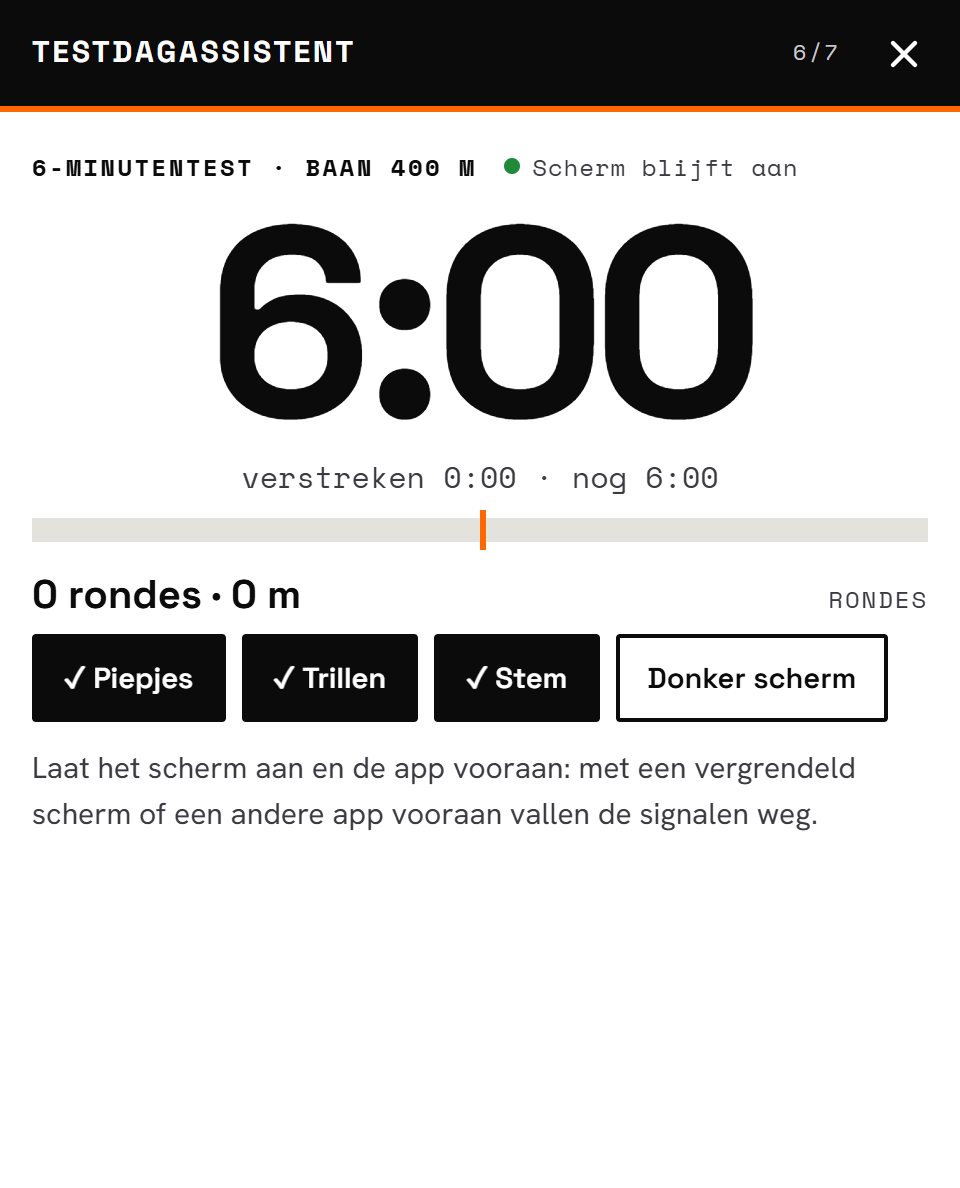
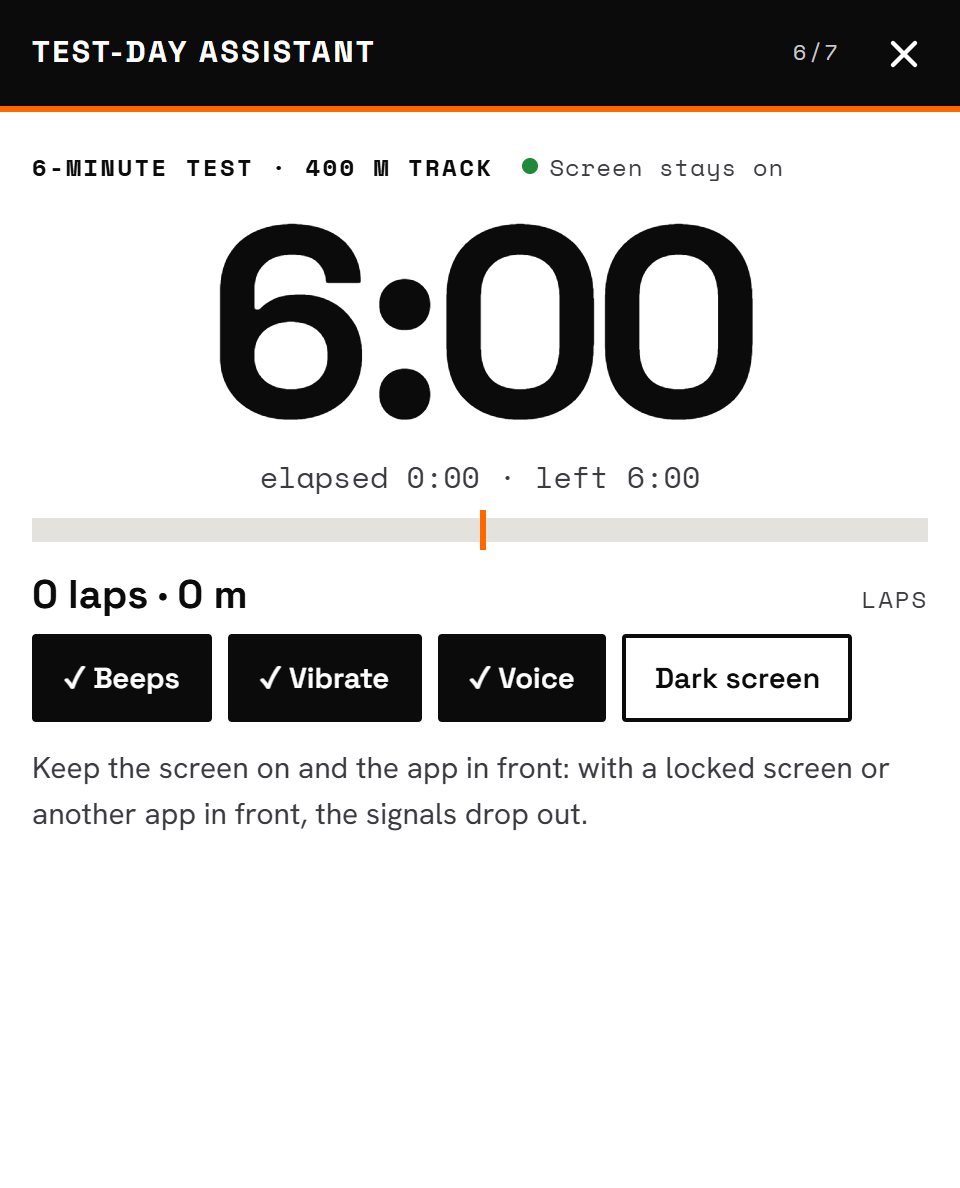
Een veldtest staat of valt met de uitvoering. De ingebouwde testdagassistent loopt in zeven stappen met je mee: de test kiezen, de voorbereiding, de opwarming, de stopsignalen, het herstel, een grote klok met piepjes, trillen of stem, en tot slot je afstand. Die komt in je invoer terecht, waar je ze nakijkt voor je berekent. De assistent is bedoeld voor lopers vanaf 18 jaar.A field test is only as good as its execution. The built-in test-day assistant takes you through seven steps: choosing the test, preparation, warm-up, warning signs, recovery, a big clock with beeps, vibration or voice, and finally your distance. That goes into your input, where you check it before you calculate. The assistant is intended for runners aged 18 and over.
Opvolgen, test na testFollowing up, test after test
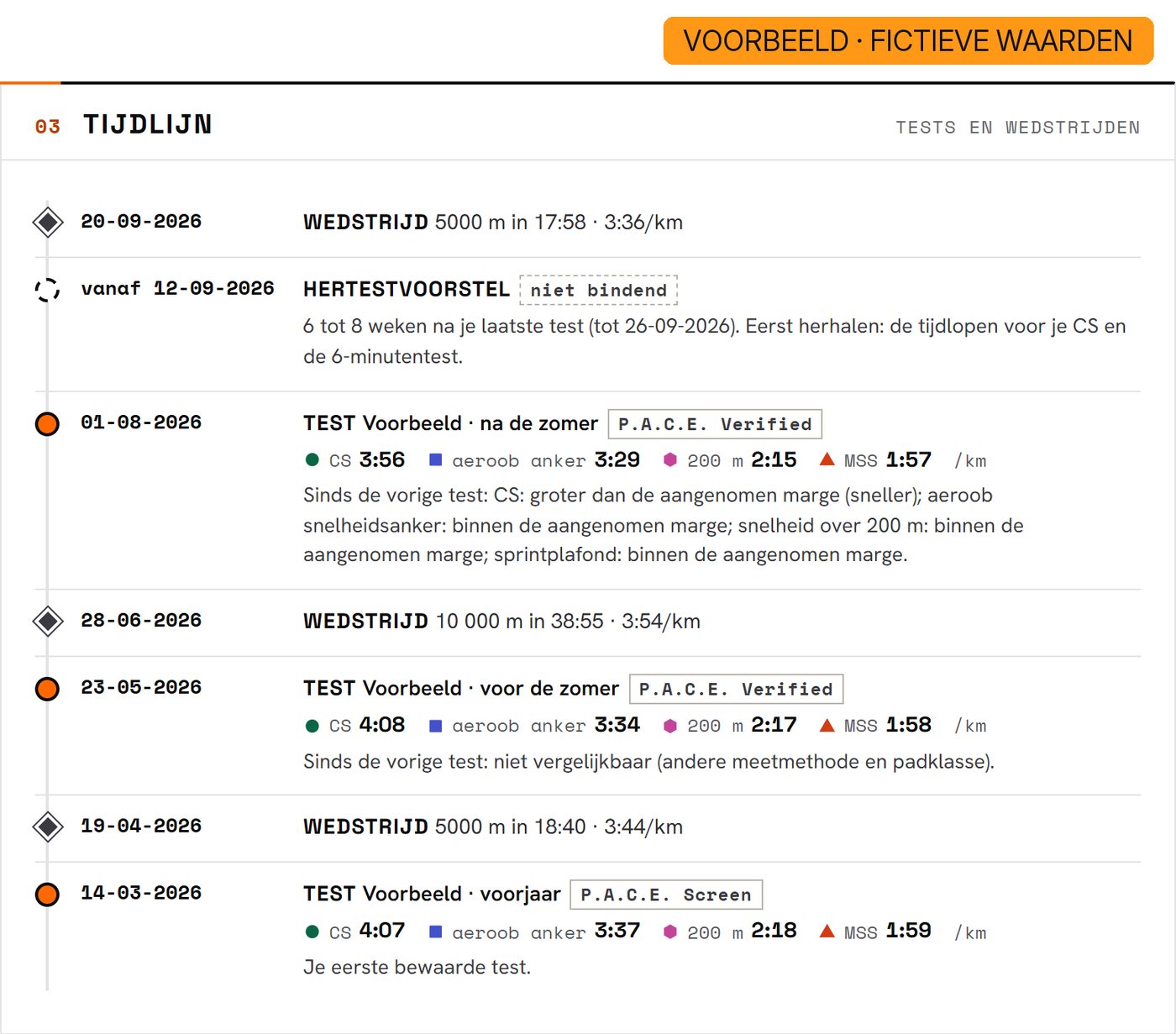
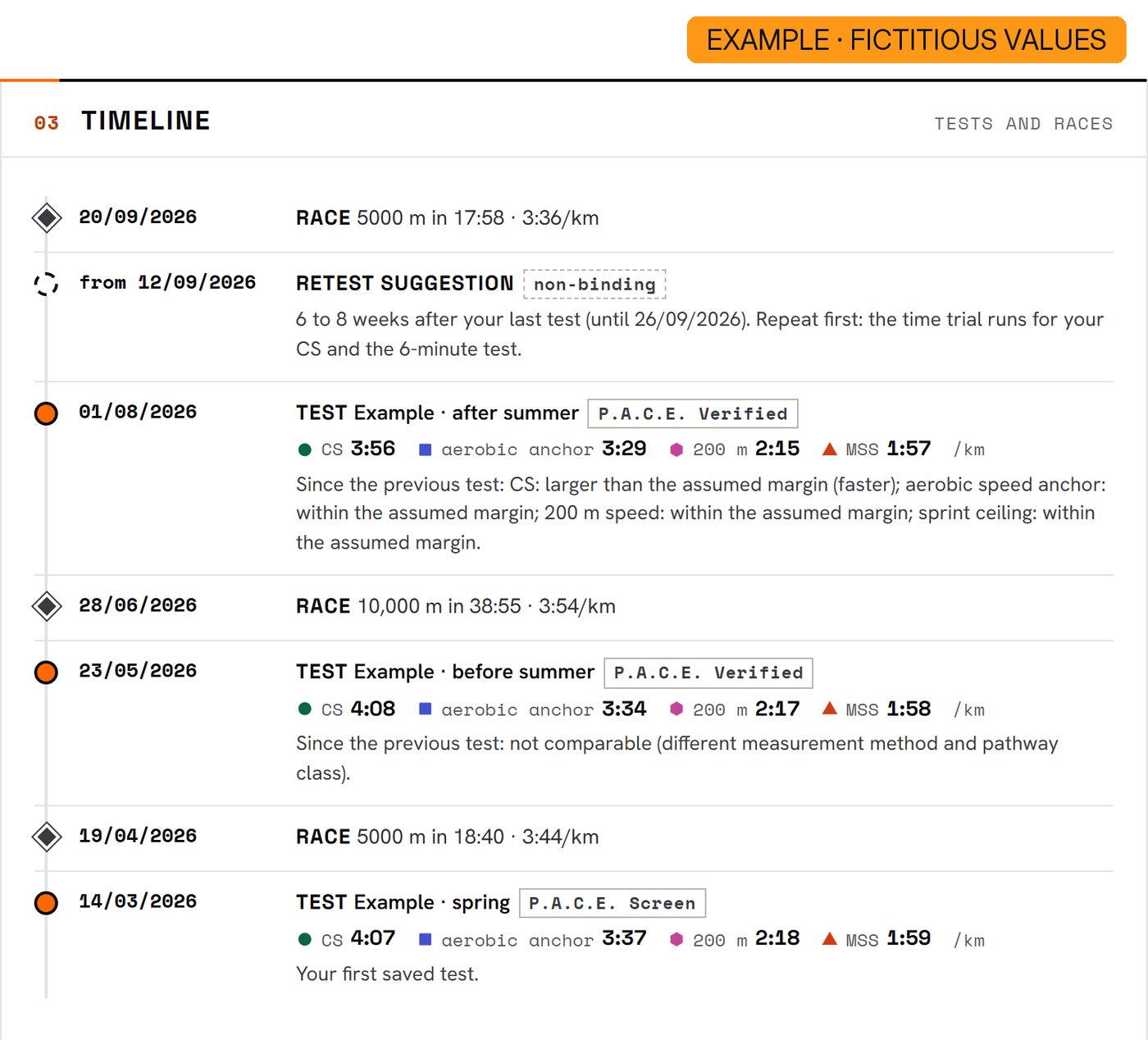
Bewaar je test, en Mijn tests toont per kernsnelheid je tempo toen en nu, en of het verschil binnen of groter dan de aangenomen marge valt. Je wedstrijden staan op dezelfde tijdlijn. Vanaf 18 jaar doet de profiler ook een niet-bindend voorstel voor wanneer een hertest zinvol is, en welke test je dan best eerst herhaalt. Je profiel bewaar je als rapport (pdf) of deel je als beeld.Save your test, and My tests shows your pace then and now for each core speed, and whether the difference lies within or is larger than the assumed margin. Your races sit on the same timeline. From age 18, the profiler also makes a non-binding suggestion for when a retest makes sense, and which test to repeat first. You can keep your profile as a report (PDF) or share it as an image.
Gratis en privéFree and private
Geen account, geen abonnement. De berekening gebeurt in je browser, en je bewaarde tests staan enkel op je eigen toestel. Niets verlaat dat toestel, tenzij je zelf iets verstuurt, bijvoorbeeld je profiel naar Toptimum als je het samen wilt bekijken.No account, no subscription. The calculation runs in your browser, and your saved tests stay on your own device only. Nothing leaves that device unless you send something yourself, for example your profile to Toptimum if you would like to go through it together.
Wat er niet in zitWhat is not included
De publieke editie houdt het bij je metingen. De profielvorm, de afstandsindicatie en trainingszones en -accenten horen bij de volledige editie: P.A.C.E. Pro, het programma voor coaches. Trainingszones tot LT2 komen uit een lactaattest, verwerkt in LakTiq. De twee zijn complementair: LakTiq toont de motor (metabool), P.A.C.E. de output (mechanisch), de snelheden die je loopt. Twee afzonderlijk verkregen meetwegen, die je naast elkaar legt.The public edition sticks to your measurements. The profile shape, the distance indication and training zones and emphases belong to the full edition: P.A.C.E. Pro, the program for coaches. Training zones up to LT2 come from a lactate test processed in LakTiq. The two are complementary: LakTiq shows the engine (metabolic), P.A.C.E. the output (mechanical), the speeds you run. Two separately obtained measurement routes, set side by side.
De profiler is in bèta en wordt verder uitgebouwd. Alle uitkomsten zijn schattingen uit je eigen invoer.The profiler is in beta and is still being developed. All results are estimates from your own input.
Open de P.A.C.E. ProfilerOpen the P.A.C.E. Profiler → Eerst het voorbeeldprofielSee the example profile first
Benieuwd naar het idee achter het raamwerk? Lees wat P.A.C.E. is.Curious about the idea behind the framework? Read what P.A.C.E. is.
De beelden tonen een fictief voorbeeldprofiel: geen echte loper, geen echte meting. Uitkomsten zijn schattingen, geen vaststelling. Een veldtest vraagt een maximale inspanning; P.A.C.E. doet geen uitspraak over je gezondheid.The images show a fictitious example profile: not a real runner, not a real measurement. Results are estimates, not findings. A field test calls for a maximal effort; P.A.C.E. makes no statement about your health.